

What can be found inside amber?
How does an insect become trapped in amber?


What can amber preserve?
-

Insects and small animals
Insects are the best-known amber inclusions.
Flies, mosquitoes, beetles, ants, wasps, moths, mites, spiders, springtails, and many other small animals have been found in amber.
In amber deposits from other parts of the world, even feathers, hair, skin, and remains of small vertebrates have been preserved. Baltic amber also contains an extraordinary diversity of ancient life.
-

Plants and traces of the forest
Amber can also preserve parts of the vegetation that surrounded the resin-producing trees.
Leaves, needles, bark, wood, seeds, mosses, lichens, fungi, pollen, spores, and other plant material can all occur as inclusions.
A tiny fragment of plant material can therefore be a real trace of a forest that existed millions of years ago.
-

Bubbles, liquid, and other natural traces
Some of the most beautiful structures in amber are neither plants nor animals.
Amber can contain air and gas bubbles, tiny liquid inclusions, sediment particles, small mineral particles, and natural patterns created as the resin flowed and hardened.
These details can create tiny landscapes inside the amber and contribute to the depth and character of each piece.


A moment from a vanished world
Perhaps the most fascinating thing about an inclusion is that it represents one particular moment.
An insect could have landed in the resin. A small piece of bark could have fallen from a tree. A bubble could have formed while the resin was flowing.
There are even pieces of amber that preserve animals caught in spiderwebs, predators and prey together, parasites on other organisms, or several animals trapped in the same resin flow.
Millions of years later, that tiny event can still be visible.
No other piece of amber has exactly the same combination of shape, color, structure, and inclusion.
FOR THE CURIOUS
How much detail can amber preserve?
One of the remarkable things about amber is how much fine detail can survive.
In well-preserved inclusions, researchers may be able to see individual hairs, facets in eyes, patterns in wings, antennae, mouthparts, and tiny surface structures.
The original biological material may have changed chemically over time even when the shape and visible detail remain.
This is why an insect or feather can look almost photographic without intact DNA still being present.
Are insects in amber rare?
Amber with clearly visible biological inclusions makes up only a small part of natural amber.
But not all inclusions are equally rare. A common small fly is very different from an unusually well-preserved animal, a rare type of inclusion, several organisms in the same piece, or an inclusion that captures an unusual moment.
Clarity, position, visibility, size, preservation, and the quality of the amber itself also matter.
At Ravgaard, we have amber with insects and other natural inclusions. Not every piece is listed online, so you are always welcome to contact us if you are looking for something particular.
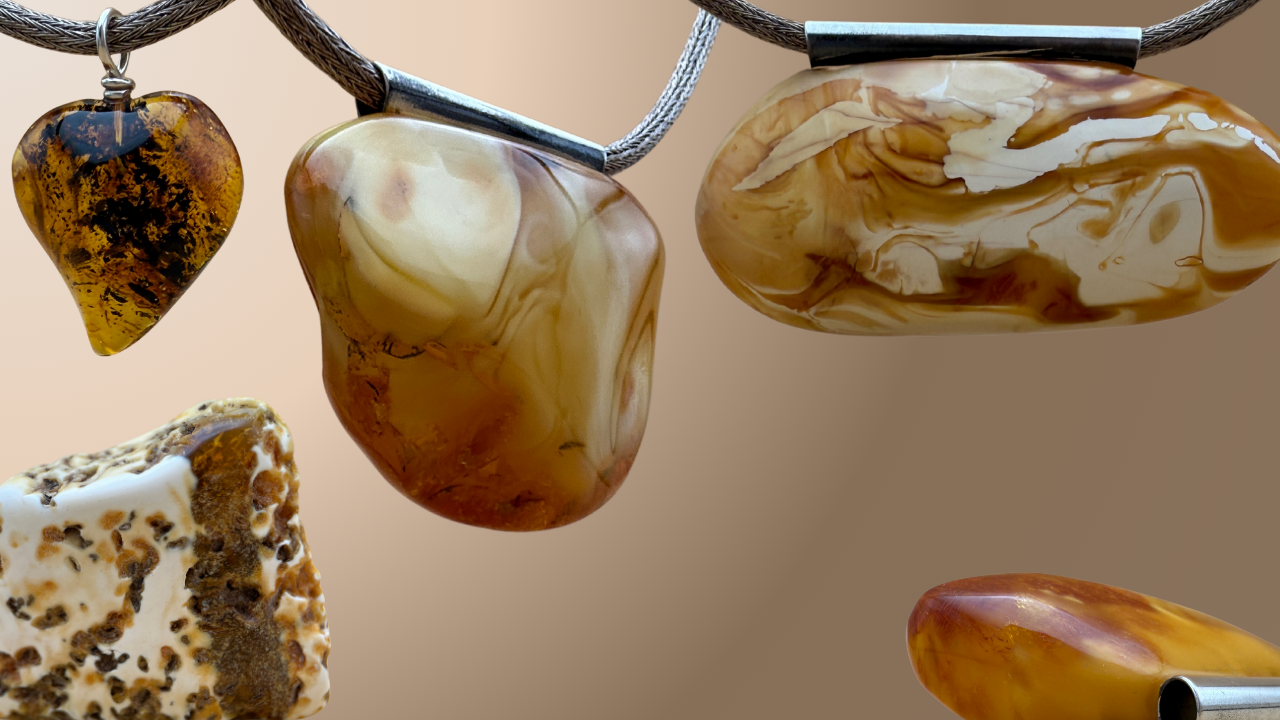

What determines amber’s color?
There is no single reason amber looks the way it does.
Its appearance can be influenced by:
- internal structure
- microscopic bubbles
- plant material and other natural inclusions
- transparency
- oxidation over time
- the way light passes through the piece
- in some cases, heat treatment or other processing
A completely transparent piece can appear clear and luminous. The same basic amber material can become milky and opaque when enormous numbers of microscopic bubbles scatter the light inside it.
Our amber colors
-
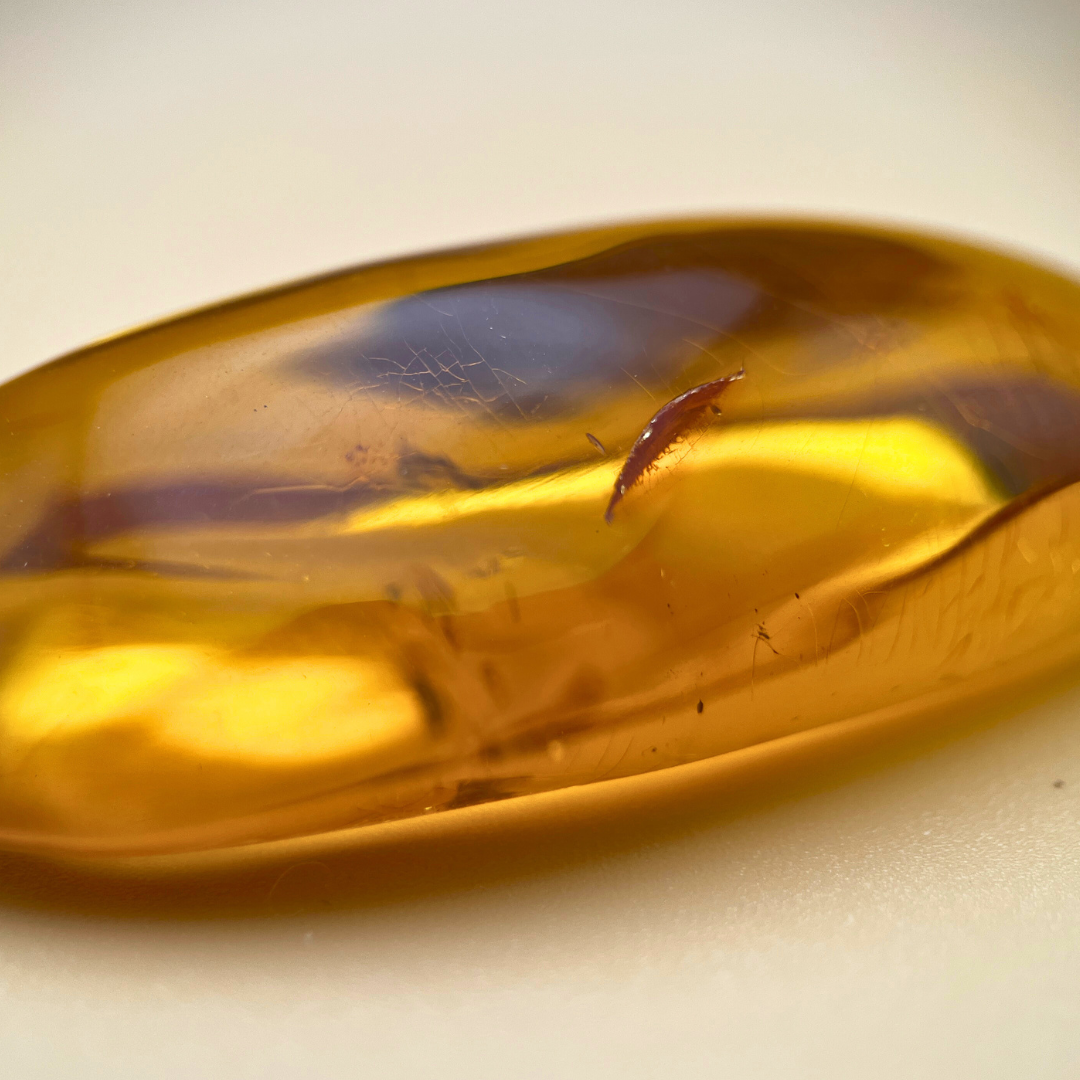
Lemon Yellow
Clear, light yellow amber with a high degree of transparency.
Some pieces are almost perfectly clear, while others contain tiny natural structures, bubbles, or inclusions.
-
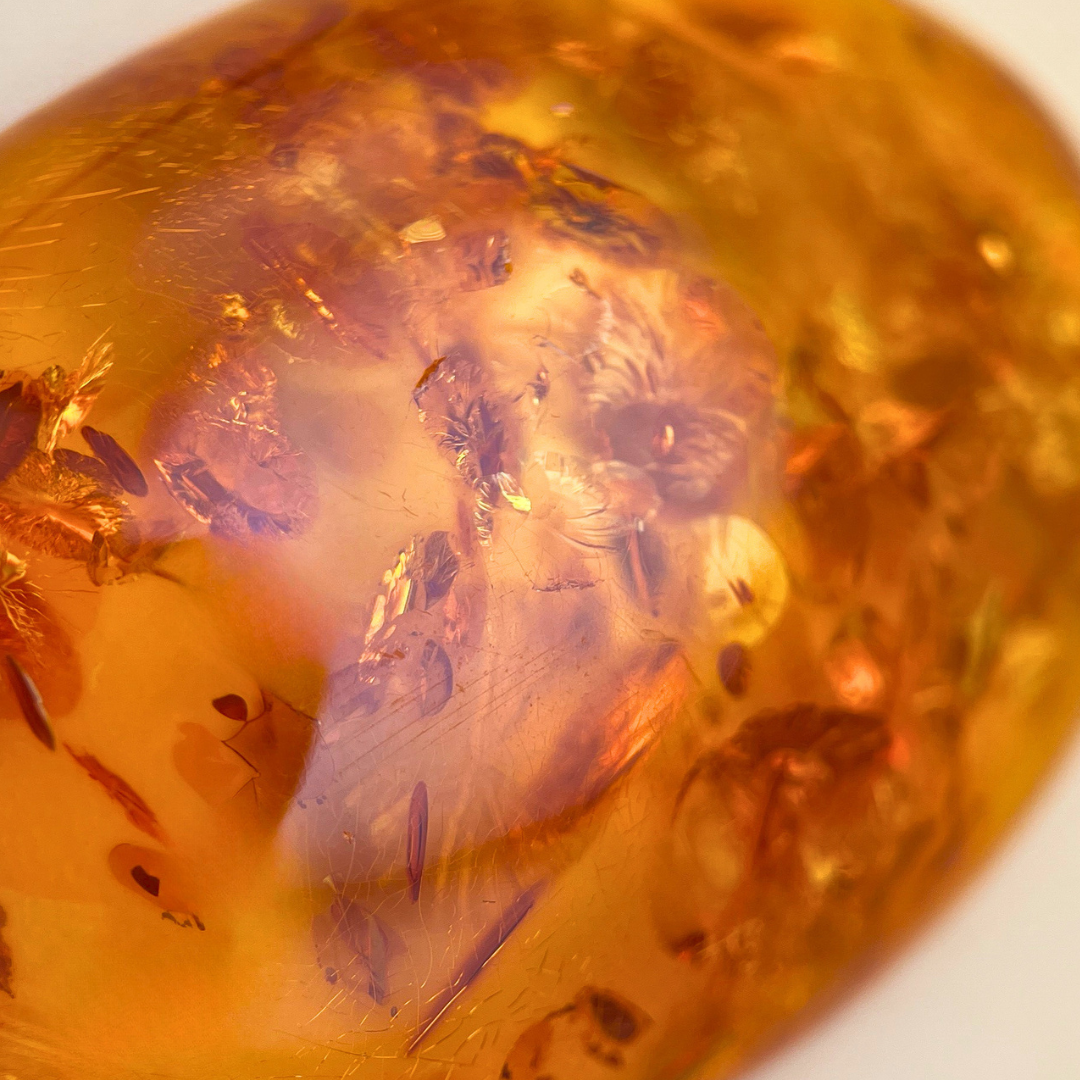
Cognac
The classic warm amber color, ranging from very light to deep, dark cognac.
Grinding and polishing can reveal the depth and clarity already present inside the amber. Over time, natural oxidation can also make transparent amber darker, warmer, and more reddish or brown.
-
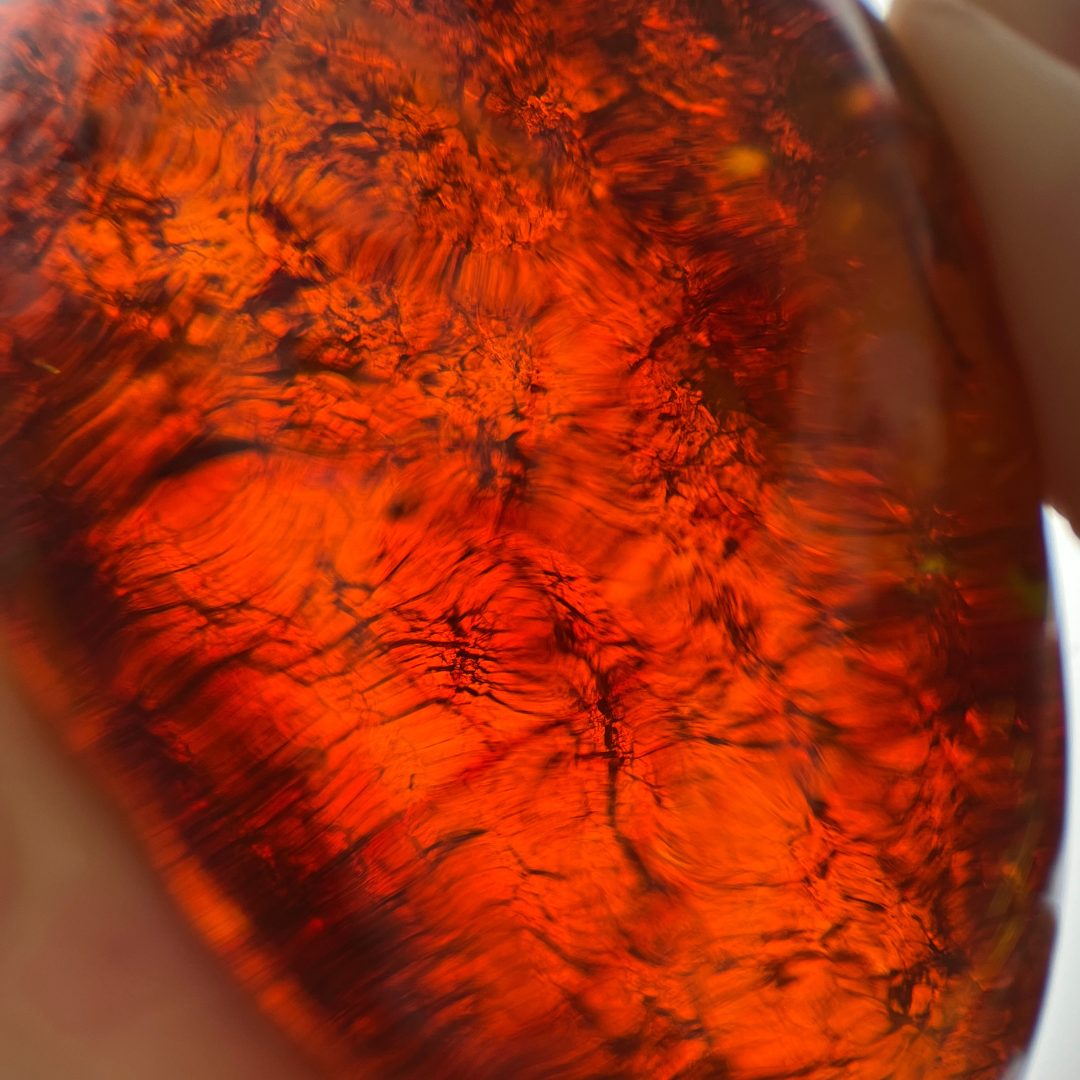
Deep red
A rich, warm red amber appearance.
Deep red tones can develop naturally through long-term aging and oxidation, but a similar appearance can also be created or enhanced through heat treatment.
The color alone therefore does not tell the whole story of how it developed.
-

Shimmer
Some amber contains tiny cracks and fine internal surfaces that catch the light and create a sparkling effect.
At Ravgaard, we call this Shimmer.
It can occur naturally in untreated amber, but similar structures can also be created or enhanced through heat treatment.
-

Mosslight
Mosslight is one of Ravgaard’s own names.
It describes very light, often lemon yellow and transparent amber with visible plant material and natural traces that create contrast, depth, and an organic pattern.
Every Mosslight piece is different because the material preserved inside it is different.
-
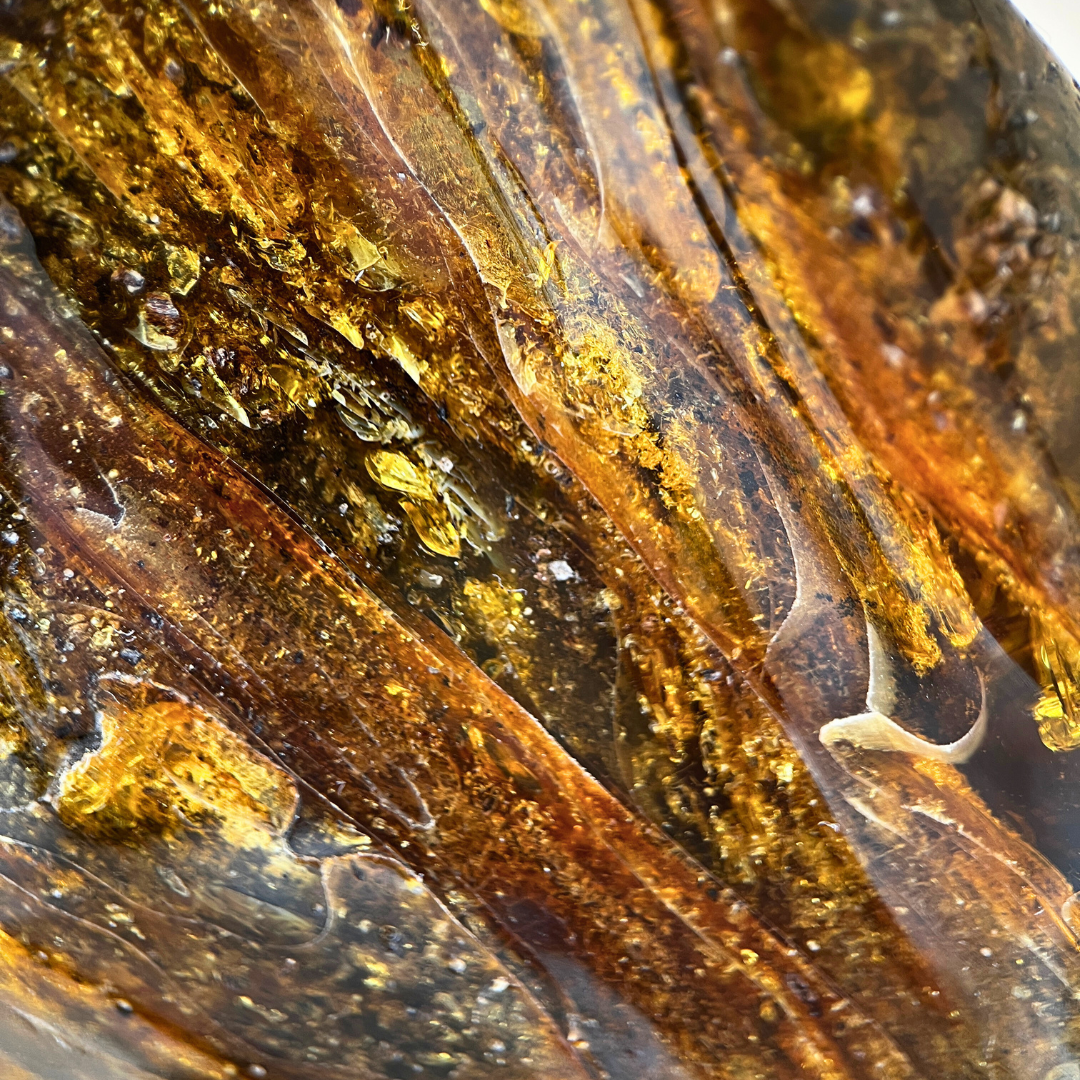
Moss Green
Moss green is a naturally green-looking amber expression created by the interaction between the amber and plant material or other dark natural inclusions.
It can contain green, brown, and almost black organic patterns and may range from relatively transparent to very dense and dark.
-
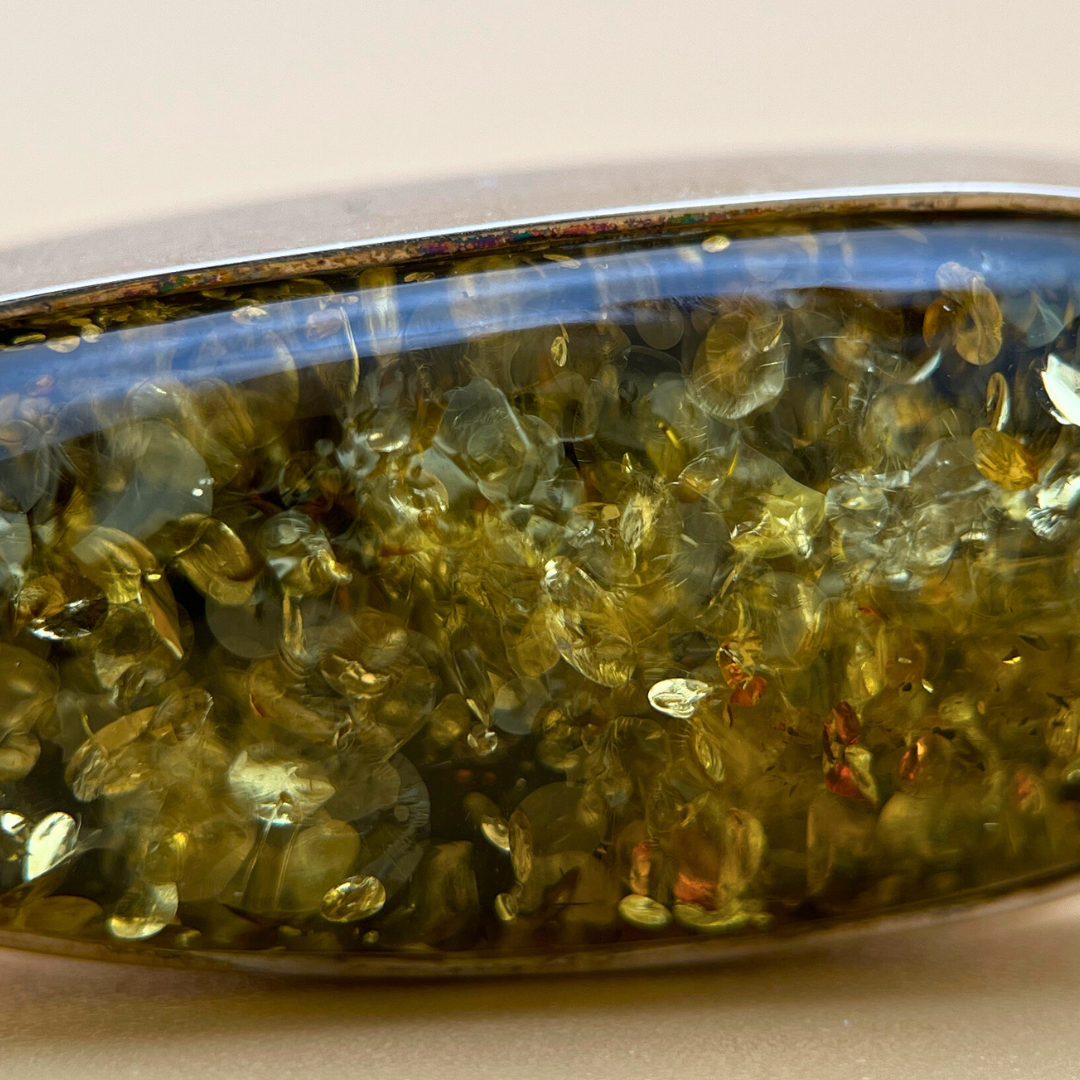
Green
At Ravgaard, Green means something different from Moss Green.
Here, the green appearance has been enhanced through processing. This may involve heat treatment or the way a darker, raw, or colored back affects the light passing through the amber.
The result can be a very distinct green appearance.
-
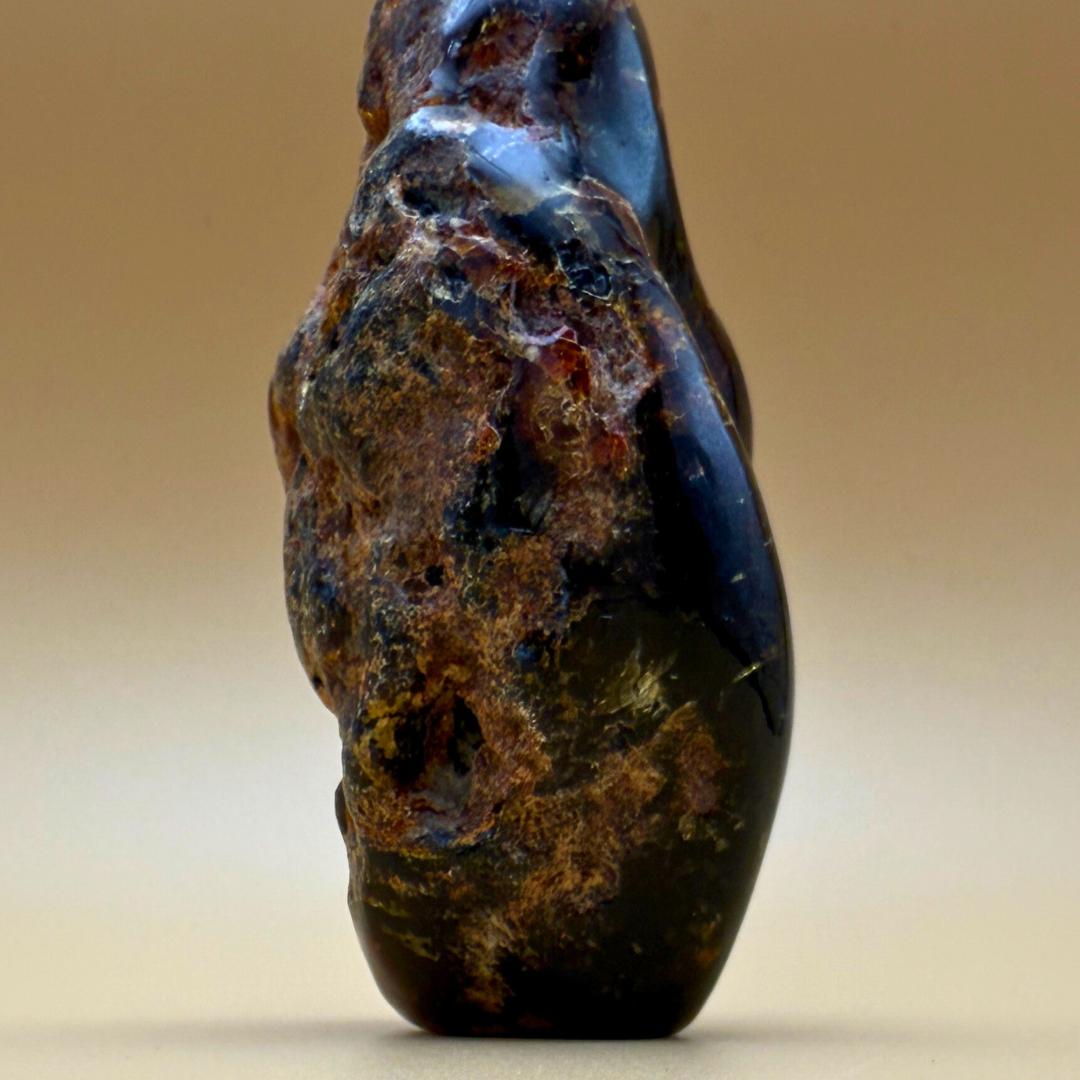
Black
Some amber can appear almost black because it contains large amounts of plant material, soil, or other natural matter.
When held against a strong light, hidden brown, red, or green tones may suddenly become visible.
-
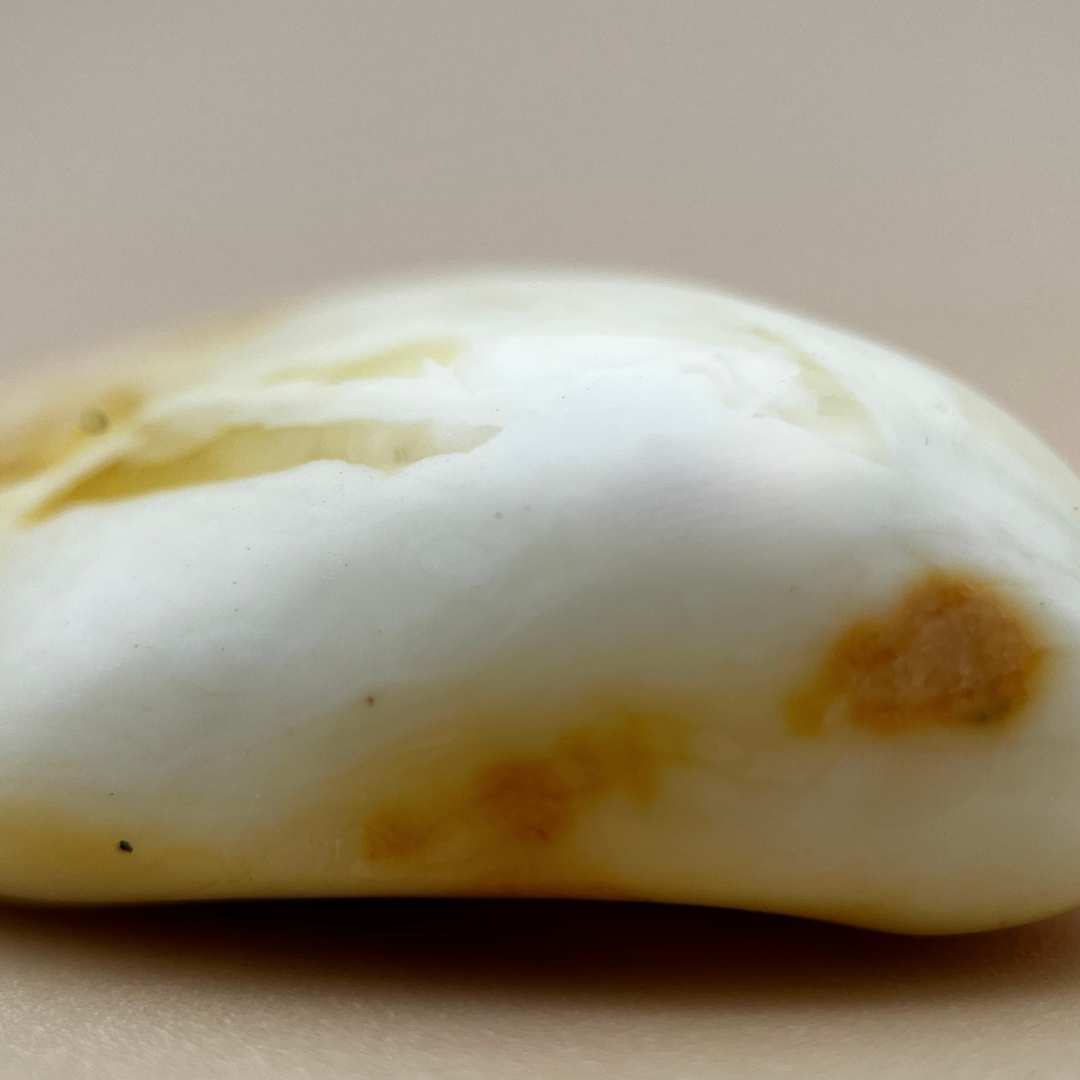
Milky White
Milky white amber can range from soft cream to almost pure white.
Its pale, opaque appearance is largely created by enormous numbers of microscopic bubbles that scatter light inside the material.
Clouds, waves, and natural patterns can make every piece look different.
-
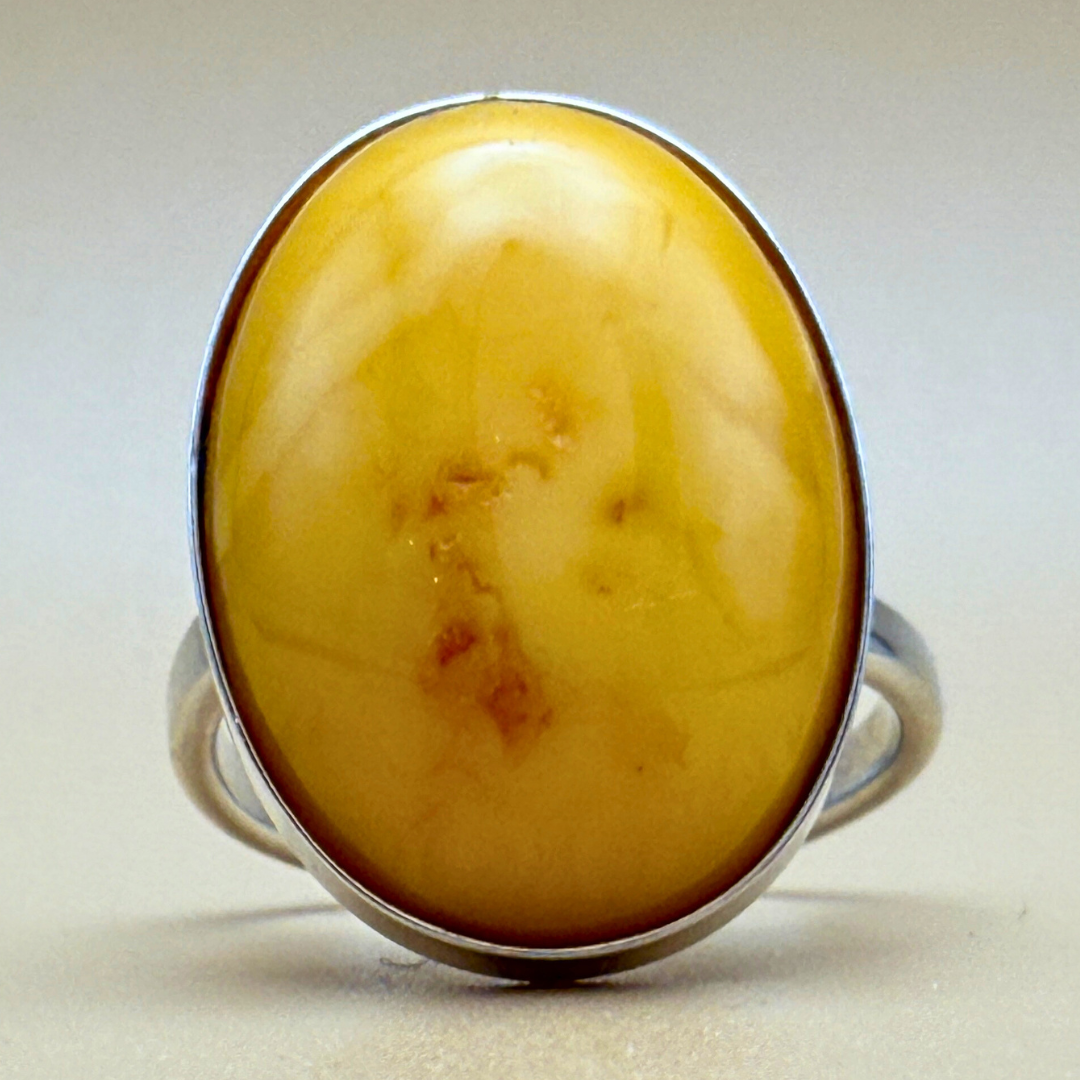
Milk Yellow
Milk yellow amber has the same opaque or partly opaque character as milky white amber, but with a warmer yellow tone.
It often contains soft clouds, patterns, and transitions between lighter and deeper yellow areas.
-
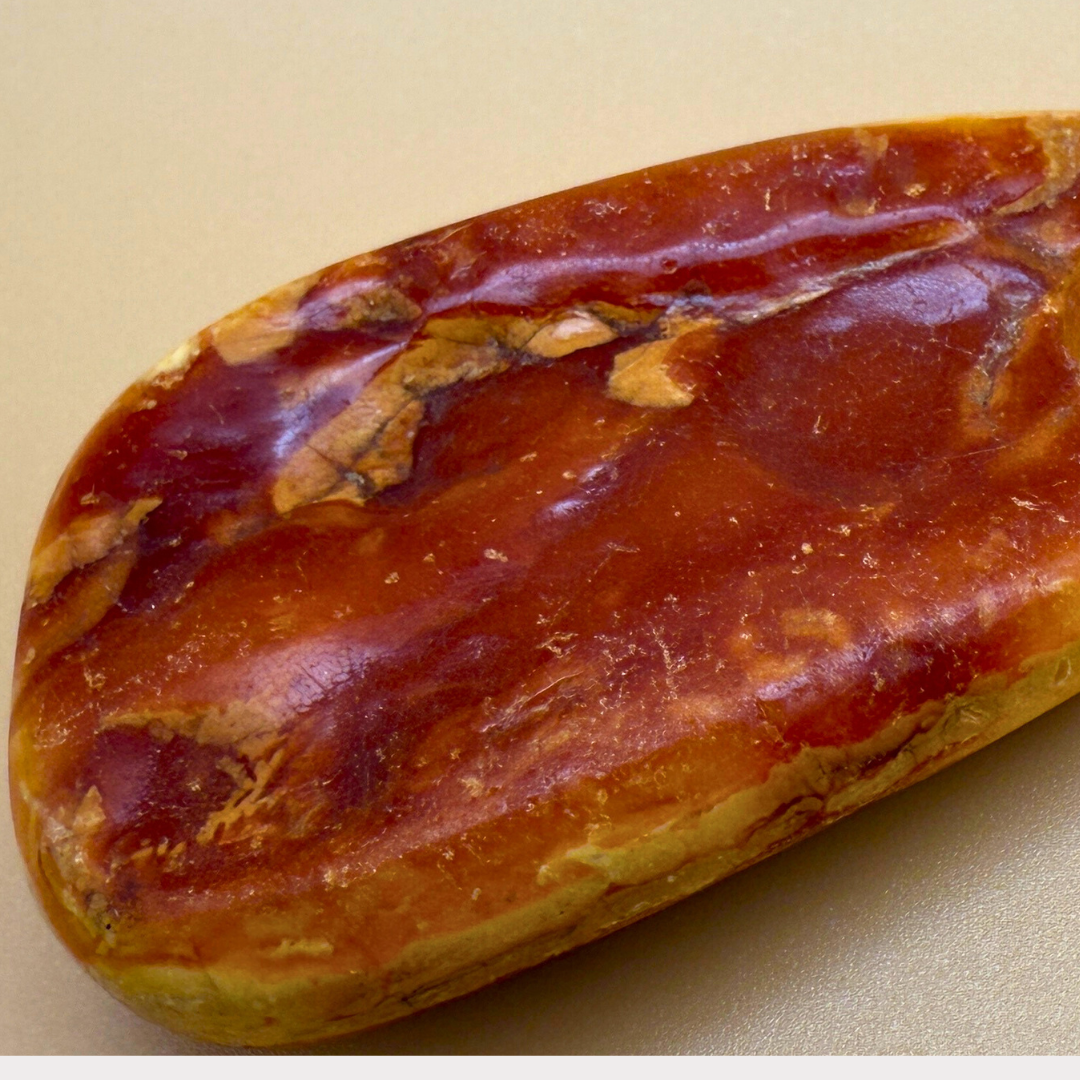
Antique Brown
Amber can slowly change as its surface oxidizes over many years.
Milky white or yellow amber may develop warm brown, orange, and reddish-brown tones while lighter amber remains underneath.
At Ravgaard, we call this naturally aged appearance Antique Brown.
-

Mix
Nature did not create amber according to our color categories.
One piece can contain milky white, lemon yellow, cognac, plant material, dark structures, and several degrees of transparency.
When several colors and appearances clearly meet in one piece or one piece of jewelry, we use the term Mix.
Some of the most interesting amber appears exactly where different colors meet.


Continue exploring amber
-

About Amber
Discover how amber formed, why we call it Baltic amber, how it reached Denmark, and what makes this ancient material so fascinating.
-

From Raw Amber to Jewelry
See how we cut, sand, and polish amber in our workshop.
-

How to Find Amber
Learn where, when, and how to look for amber along the coast.
-

Genuine Amber & Imitations
Learn more about genuine amber, treatments, and common imitations.


